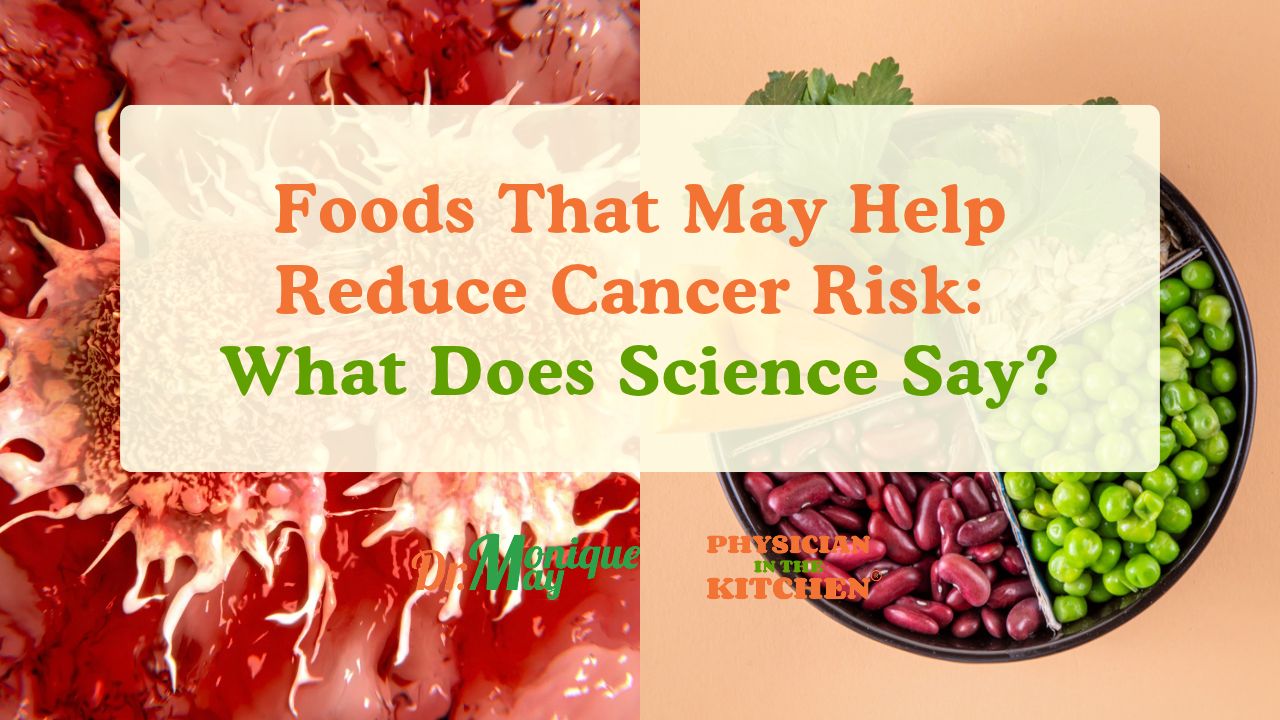
Can the foods you eat influence your chances of developing cancer? Research suggests that your diet can play a role in long-term cancer prevention. While no foods that reduce cancer risk, certain eating patterns are associated with a lower risk of developing some types of cancer.
A healthy, plant-forward diet rich in vegetables, fruits, beans, and whole grains provides fiber, vitamins, minerals, and beneficial plant compounds that support overall health. Understanding what the research actually shows can help you make practical choices to protect your long-term health.
Table of Contents
Can Your Diet Influence Your Cancer Risk?
Yes. Diet is one of several lifestyle factors that can influence cancer risk, although its impact varies depending on the type of cancer.
Research suggests that eating patterns centered on whole plant foods may help reduce the risk of certain cancers, particularly colorectal cancer. Diet can also influence body weight, inflammation, and metabolic health, which are relevant to cancer risk.
However, cancer develops through a complex combination of genetic, environmental, and lifestyle factors. Eating well is an important part of prevention, but it cannot eliminate your risk.
What Does the Research Say About Plant-Based Eating and Cancer?
A plant-based eating pattern emphasizes vegetables, fruits, whole grains, beans, lentils, nuts, and seeds.
Research from the American Institute for Cancer Research and the World Cancer Research Fund supports making these foods a major part of your daily diet.
These foods provide fiber and a variety of naturally occurring compounds that support normal cellular functions and overall health.
Importantly, a plant-based diet does not necessarily mean you must become vegan. The focus is on eating more minimally processed plant foods while limiting foods associated with increased cancer risk.
Foods Associated With Better Cancer Prevention Outcomes
Rather than relying on individual superfoods, focus on including a variety of nutrient-rich foods in your meals.
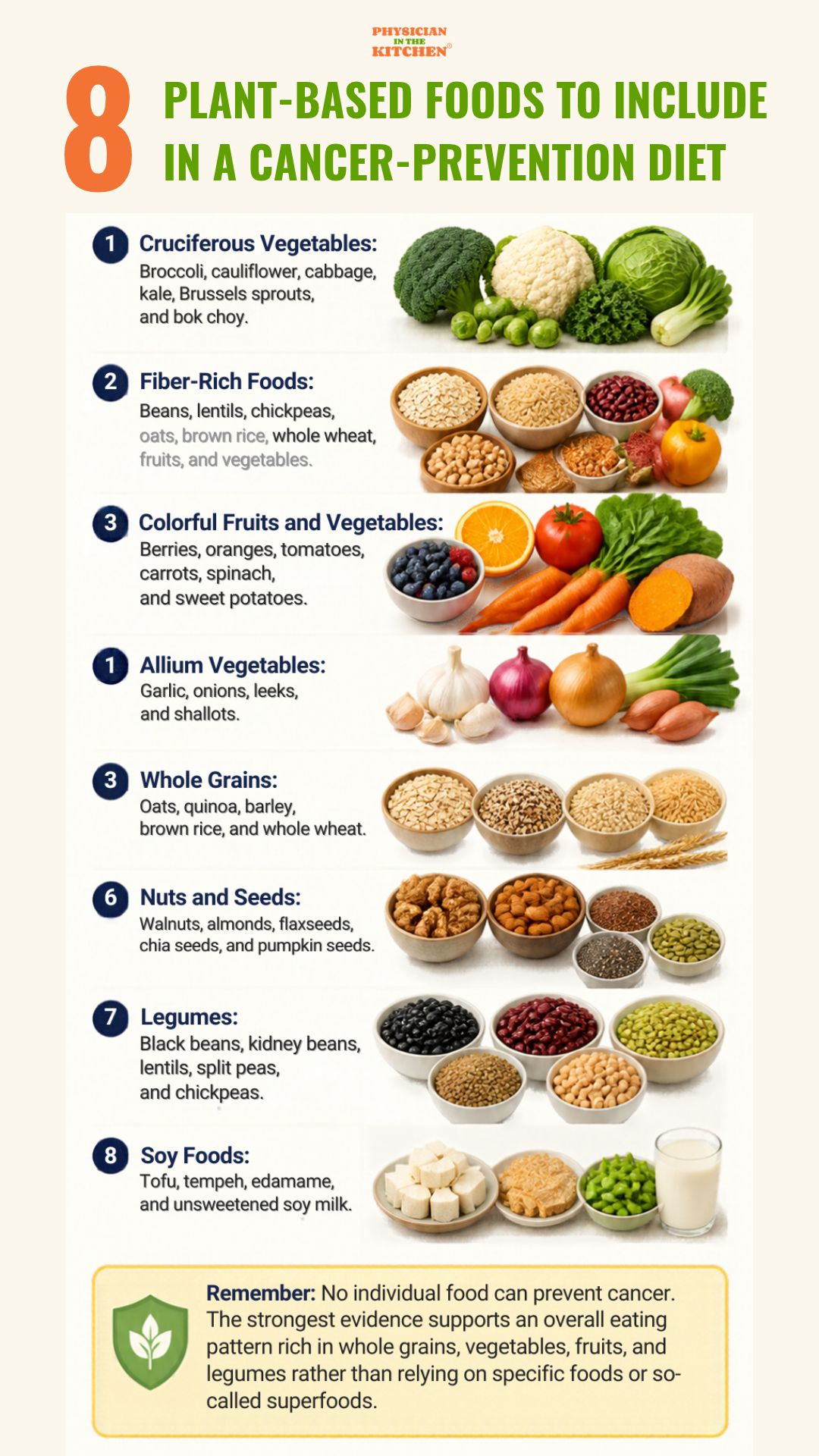
Cruciferous Vegetables
Broccoli, cauliflower, cabbage, kale, Brussels sprouts, and bok choy belong to the cruciferous vegetable family.
They contain glucosinolates, which break down into biologically active compounds, including isothiocyanates. These compounds are being studied for their potential effects on cellular processes involved in cancer development.
Although laboratory research is promising, human studies have not consistently established that eating these vegetables directly prevents cancer. Still, they are nutritious additions to a balanced diet.
Fiber-Rich Foods
Beans, lentils, chickpeas, oats, brown rice, whole wheat, fruits, and vegetables are excellent sources of dietary fiber.
Fiber plays an important role in digestive health. Research provides strong evidence that eating fiber-rich foods and whole grains is associated with a lower risk of colorectal cancer.
Fiber also supports a healthy gut microbiome and can help with weight management, another important consideration in cancer prevention.
Colorful Fruits and Vegetables
Berries, oranges, tomatoes, carrots, spinach, and sweet potatoes provide vitamins, minerals, and phytochemicals.
Different plant foods contain different beneficial compounds, so eating a variety of colors is a practical way to obtain a broad range of nutrients.
Read: #EatYourRainbow
Beans, Lentils, Nuts, and Seeds
These foods provide plant protein, fiber, healthy fats, and other nutrients. They are also useful alternatives to processed meats and can help make meals more satisfying and nutritious.
For more practical ways to incorporate cancer-protective plant foods into your everyday meals, explore Physician in the Kitchen for plant-based recipes, cooking tips, and insights into the health benefits of whole plant foods.
The Role of Phytochemicals in Plant Foods
Plants contain naturally occurring compounds called phytochemicals. These include carotenoids, flavonoids, polyphenols, anthocyanins, and glucosinolates.
Researchers are studying how these compounds may influence inflammation, oxidative stress, cellular signaling, and other biological processes associated with cancer development.
For example, carotenoids give carrots and sweet potatoes their orange color, while anthocyanins contribute to the deep red, purple, and blue colors of berries.
The important takeaway is not to chase individual phytochemicals or supplements. Instead, eat a wide variety of whole plant foods to benefit from their combined nutritional properties.
Foods and Dietary Habits to Limit
Cancer prevention is not just about what you add to your diet. It also involves being mindful of certain foods and habits.
Consider limiting:
- Processed meats: Bacon, sausages, hot dogs, and deli meats are associated with an increased risk of colorectal cancer.
- Excessive red meat: Regularly consuming large amounts of beef, pork, and lamb may increase colorectal cancer risk.
- Alcohol: Alcohol consumption increases the risk of several cancers. From a cancer prevention perspective, it is best not to drink.
- Highly processed, calorie-dense foods: Frequent consumption can contribute to excess weight, which is associated with an increased risk of several cancers.
- Sugary beverages: Limiting these can help prevent excess calorie intake and support a healthy weight.
Focus on improving your overall eating pattern rather than worrying about one particular meal or food.
Other Lifestyle Habits That May Help Lower Cancer Risk
Nutrition is only one part of cancer prevention. Other important habits include:
- Avoid tobacco: Not smoking and avoiding secondhand smoke are especially important for preventing lung cancer.
- Maintain a healthy weight: Excess body fat is associated with an increased risk of several cancers.
- Stay physically active: Aim for 150–300 minutes of moderate-intensity physical activity each week.
- Limit alcohol: Avoiding alcohol is the best choice for reducing alcohol-related cancer risk.
- Keep up with recommended screenings: Appropriate screening can detect certain cancers early or identify precancerous changes.
- Stay current with recommended vaccinations: HPV and hepatitis B vaccinations help prevent infections associated with certain cancers.
These habits work together to support better long-term health.
What Diet Cannot Do: Understanding Cancer Prevention Limitations
It is important to remember that no food, supplement, or eating pattern can guarantee protection against cancer.
Even people who eat well, exercise regularly, and maintain a healthy weight can develop cancer. Genetics, age, environmental exposures, infections, and other factors also influence individual risk.
Be cautious of claims that particular foods, juices, detoxes, or supplements can prevent or cure cancer. High-dose supplements are not a substitute for a healthy diet, and some may even cause harm.
If you have a strong family history of cancer or other risk factors, talk with your healthcare professional about appropriate screening and whether genetic counseling is recommended.
Conclusion: Make Healthy Eating Part of Your Prevention Strategy
The science behind foods that reduce cancer risk points toward a consistent message: focus on an overall healthy eating pattern rather than searching for a miracle food.
Fill your plate with vegetables, fruits, beans, lentils, whole grains, nuts, and seeds. Limit processed meats, avoid tobacco, stay active, maintain a healthy weight, and keep up with recommended screenings.
Small, sustainable choices can make a meaningful contribution to your health over time. You cannot control every cancer risk, but you can take practical steps to support your body’s health and reduce some preventable risks.
This article is for educational purposes only and is not a substitute for personalized medical advice, diagnosis, or treatment. Talk with your healthcare professional about your individual cancer risks and recommended screenings.
References and Scientific Sources
The following authoritative sources support the article’s medical and nutritional information:
1. American Cancer Society (ACS). Guideline for Diet and Physical Activity for Cancer Prevention.
2. World Cancer Research Fund (WCRF). Eat a Diet Rich in Whole Grains, Vegetables, Fruit and Beans.
3. National Cancer Institute (NCI). Diet and Cancer Risk.
4. National Cancer Institute (NCI). Cruciferous Vegetables and Cancer Prevention.
5. American Institute for Cancer Research (AICR). Plant-Based Diet and Cancer Prevention.