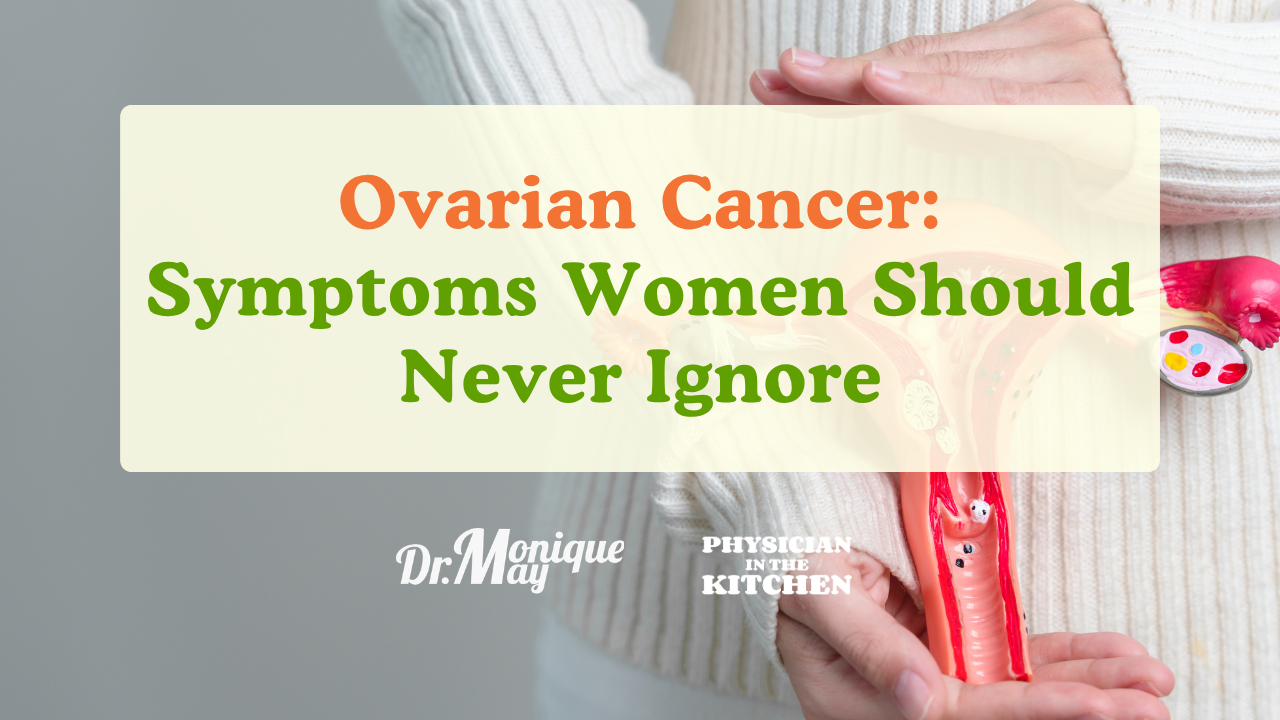
Ovarian cancer can be difficult to recognize because its early symptoms may be subtle, vague, or mistaken for common digestive or menstrual problems. That is one reason knowing your own “normal” and paying attention to persistent changes matters. So here are some of the ovarian cancer symptoms you shouldn’t miss.
During Ovarian Cancer Awareness Month, it is worth remembering a simple message: new, persistent, or unusual symptoms deserve attention.
Table of Contents
Why Ovarian Cancer Symptoms Can Be Difficult to Recognize
Ovarian cancer begins in or around the ovaries and can affect women at different stages of life. Unfortunately, there is no reliable routine screening test for ovarian cancer in women who have no symptoms.
Early ovarian cancer may cause few or no symptoms. When symptoms do occur, they can resemble more common conditions such as gastrointestinal problems, urinary issues, menstrual changes, or other gynecologic conditions.
That does not mean every episode of bloating or abdominal discomfort is cancer. It means that persistent or unusual changes should not automatically be dismissed.
Symptoms Women Should Know
Possible symptoms of ovarian cancer include:
- Persistent bloating or an increase in abdominal size
- Pelvic or abdominal pain or pressure
- Feeling full quickly or having difficulty eating
- Changes in bowel habits, such as constipation
- Changes in urination, including needing to urinate more often or urgently
- Unexplained fatigue
- Back pain
- Menstrual changes or unusual vaginal bleeding
These symptoms are common and can have many causes other than cancer. The concern increases when symptoms are new for you, occur frequently, persist, or become progressively worse.
The important question isn’t simply, “Do I have one of these symptoms?” It is, “Is this a new or persistent change that isn’t normal for me?”
When Ovarian Cancer Symptoms Are Concerning
Pay particular attention when several symptoms occur together or when a symptom doesn’t resolve as expected.
For example, occasional bloating after a large meal is usually not concerning by itself. But persistent bloating accompanied by pelvic discomfort, changes in bowel or bladder habits, or feeling full unusually quickly deserves a conversation with your healthcare professional.
Keeping track of when symptoms began, how often they occur, and whether they are getting worse can make your medical visit more productive.
And remember: having these symptoms does not mean you have ovarian cancer. Your healthcare professional can determine whether further evaluation is appropriate.
Who May Be at Higher Risk?
Most women who develop ovarian cancer are not considered high-risk. However, certain factors can increase risk, including:
- Increasing age, particularly being middle-aged or older
- A close family history of ovarian cancer
- Inherited genetic changes such as BRCA1 or BRCA2
- Lynch syndrome
- A personal history of certain cancers, including breast, uterine, or colorectal cancer
- Endometriosis
- Certain reproductive and hormonal factors
Having a risk factor does not mean you will develop ovarian cancer, just as having no known risk factors does not eliminate the possibility.
Family History and Genetic Risk
Your family history can provide important clues about your cancer risk.
Tell your healthcare professional if a close relative has had ovarian cancer. Also mention family histories of breast, uterine, or colorectal cancer, particularly when several relatives are affected or cancers occurred at younger ages.
Inherited changes in BRCA1 and BRCA2 can substantially increase the risk of ovarian and breast cancers. Lynch syndrome is another inherited condition associated with increased ovarian cancer risk.
If your family history suggests a possible inherited cancer syndrome, your healthcare professional may recommend genetic counseling and, when appropriate, genetic testing.
Knowing your genetic risk can help you and your healthcare team make more informed decisions about risk management.

Can Ovarian Cancer Be Prevented?
There is currently no guaranteed way to prevent ovarian cancer. Some factors are associated with a lower risk, including having given birth, breastfeeding, and previous use of certain oral contraceptives. Some surgical procedures can also reduce risk in appropriate circumstances.
However, these approaches are not appropriate for everyone with ovarian cancer symptoms. For example, medications or preventive surgery involve individual benefits and risks and should be discussed with a healthcare professional.
This is also why prevention should not be reduced to a single food, supplement, or lifestyle habit.
Plant-Based Connection: Nutrition as Part of Overall Cancer Prevention
There is no particular food or dietary pattern that can guarantee protection from ovarian cancer. In fact, research has not established diet as a definitive way to prevent ovarian cancer specifically.
Still, a nutrient-dense eating pattern can support overall health and be part of a broader cancer-prevention lifestyle.
A plant-forward pattern emphasizing:
- Vegetables
- Fruits
- Beans and other legumes
- Whole grains
- Nuts and seeds
can provide fiber, vitamins, minerals, and a variety of beneficial plant compounds. The American Cancer Society recommends an overall healthy eating pattern, regular physical activity, and maintaining a healthy weight as part of cancer-risk reduction.
But nutrition has an important limit: persistent symptoms should never be managed with diet alone.
If something feels different or continues to bother you, seek medical evaluation rather than trying to “eat your way out of it.”
When to Talk With Your Doctor
Make an appointment if you experience ovarian cancer symptoms that are:
- New or unusual for you
- Persistent or occurring frequently
- Becoming more severe
- Occurring in combination with other concerning symptoms
- Accompanied by unexplained weight loss, unusual bleeding, or other significant changes
There is no simple, reliable screening test for ovarian cancer in women without symptoms. The Pap test, for example, does not screen for ovarian cancer. When symptoms or risk factors are present, your healthcare professional may determine whether diagnostic testing is appropriate.
Depending on your situation, evaluation may include a medical history, pelvic examination, imaging such as ultrasound, blood tests, or referral to a specialist.
🩺 Doctor’s Orders
Don’t dismiss persistent bloating, pelvic or abdominal discomfort, changes in bowel or bladder habits, or feeling full quickly as “just getting older.” If something is new, persistent, or unusual for you, talk with your healthcare professional.
You know your body better than anyone. You don’t need to panic over every symptom—but you also don’t need to ignore something that doesn’t feel right.
Practical Takeaways
1. Know your normal.
Pay attention to changes in your digestion, bladder habits, pelvic health, menstrual pattern, and overall well-being.
2. Don’t ignore persistent symptoms.
Bloating, pelvic or abdominal discomfort, changes in bowel or bladder habits, and feeling full quickly can have many causes, but persistent symptoms deserve evaluation.
3. Know your family history.
Ask relatives about significant cancer diagnoses and share that information with your healthcare professional.
4. Understand your genetic risk.
A family history of ovarian, breast, uterine, or colorectal cancer may warrant a discussion about genetic counseling.
5. Focus on overall health.
Regular physical activity, nutritious eating, healthy weight management, avoiding tobacco, and other healthy habits can contribute to cancer prevention and overall well-being.
6. Don’t rely on diet to explain away symptoms.
Healthy nutrition is valuable, but it is not a substitute for medical evaluation.
Conclusion
Ovarian cancer can be challenging to recognize, but awareness gives women an important tool: knowing when something has changed and taking that change seriously.
You do not need to assume the worst when you experience bloating, abdominal discomfort, or changes in digestion or urination. These symptoms are common and often have causes unrelated to cancer.
But if something is persistent, unusual, or different from your normal, don’t simply chalk it up to aging, stress, or a sensitive stomach.
Pay attention. Speak up. Get evaluated when something doesn’t feel right.
That simple habit can be an important part of taking an active role in your health.
Disclaimer: This article is for educational purposes only and is not a substitute for personalized medical advice, diagnosis, or treatment. If you have questions about your health, symptoms, medications, or individual cancer risk, talk with your healthcare professional.