High cholesterol is a common risk factor for heart disease, but the foods you eat can make a difference. Knowing which foods to lower cholesterol to include in your daily diet and which to limit can help support healthier cholesterol levels and long-term cardiovascular health.
Cholesterol is essential for the body, but too much LDL (low-density lipoprotein) cholesterol can contribute to plaque buildup in the arteries. Fortunately, practical changes in your eating habits, physical activity, and other lifestyle choices may help improve your cholesterol levels and lower your risk of heart disease.
Table of Contents
Understanding Cholesterol: LDL, HDL, and Triglycerides
Cholesterol is a waxy substance that your body needs to produce hormones, vitamin D, and cell membranes. Your liver makes cholesterol, and you also get it from certain foods.
A cholesterol blood test, or lipid panel, typically measures:
- LDL (low-density lipoprotein): Often called “bad” cholesterol, LDL can contribute to plaque buildup in the arteries when levels are elevated.
- HDL (high-density lipoprotein): Often called “good” cholesterol, HDL helps transport cholesterol back to the liver for processing.
- Triglycerides: A type of fat in the blood that stores energy. Elevated triglycerides can increase cardiovascular risk, particularly when combined with other risk factors.
Although HDL is often called good cholesterol, a higher HDL level alone does not necessarily eliminate the risks associated with elevated LDL.
Why High LDL Cholesterol Matters for Heart Health
High LDL cholesterol can contribute to atherosclerosis, a condition in which plaque accumulates inside the arteries. Over time, this buildup can narrow arteries and restrict blood flow.
If plaque ruptures, it may trigger a blood clot that causes a heart attack or stroke. High cholesterol often has no noticeable symptoms, which is why regular screening is important, even if you feel healthy.
Genetics, age, diet, physical activity, smoking, diabetes, and other health conditions can all influence cholesterol levels.
Best Foods to Lower Cholesterol
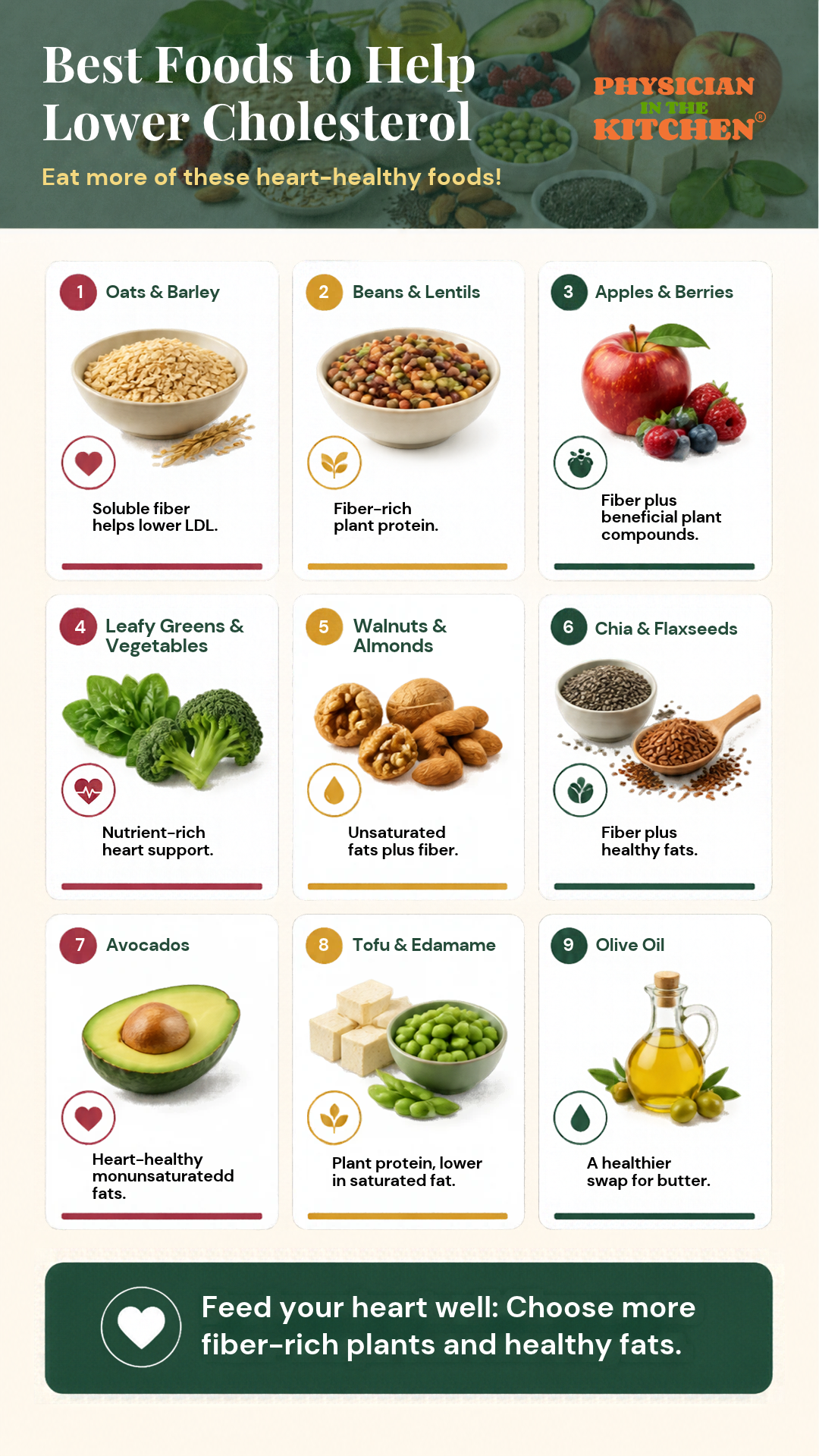
A heart-healthy diet emphasizes whole and minimally processed foods, particularly those rich in soluble fiber, unsaturated fats, and plant-based nutrients.
Foods to include more often:
- Oats and barley: Contain beta-glucan, a soluble fiber that may help reduce LDL cholesterol by limiting cholesterol absorption.
- Beans, lentils, and chickpeas: Provide soluble fiber and plant protein, making them excellent alternatives to some animal-based proteins.
- Fruits: Apples, citrus fruits, berries, and pears provide fiber and beneficial plant compounds.
- Vegetables: Leafy greens, broccoli, carrots, and other vegetables contribute fiber and nutrients that support overall cardiovascular health.
- Nuts and seeds: Almonds, walnuts, chia seeds, and flaxseeds provide unsaturated fats, fiber, and other beneficial nutrients.
- Whole grains: Brown rice, whole-wheat bread, quinoa, and other whole grains help increase fiber intake.
- Soy foods: Tofu, edamame, and tempeh provide plant protein and can replace foods higher in saturated fat.
- Healthy oils: Olive oil and other unsaturated plant oils can replace butter and other sources of saturated fat.
These foods can be incorporated into everyday meals, from oatmeal and fruit at breakfast to bean-based soups, vegetable bowls, and whole-grain dishes at lunch and dinner.
Foods to Limit When You Have High Cholesterol
One of the most effective dietary changes for managing LDL cholesterol is reducing saturated fat and replacing it with unsaturated fats. Saturated fat can raise LDL cholesterol, while replacing it with healthier fats may help improve your cholesterol profile.
Try to limit:
- Fatty and processed meats: Bacon, sausage, hot dogs, fatty cuts of beef, and processed deli meats.
- Full-fat dairy products: Butter, cream, full-fat cheese, and ice cream.
- Coconut and palm oils: Despite being plant-derived, these oils are high in saturated fat.
- Fried foods: Particularly those prepared with saturated fats or repeatedly used oils.
- Commercial baked goods: Cookies, pastries, and other products made with shortening or partially hydrogenated oils.
You don’t need to eliminate every food you enjoy. Focus on making healthier substitutions consistently rather than aiming for perfection.
How a Whole-Food, Plant-Based Diet Supports Heart Health
A whole-food, plant-based diet emphasizes vegetables, fruits, beans, lentils, whole grains, nuts, and seeds. These foods naturally provide fiber and tend to be lower in saturated fat, particularly when they replace fatty meats, butter, and other foods high in saturated fat.
A plant-based diet for cholesterol management can be a practical approach to improving your overall dietary pattern. However, plant-based does not automatically mean heart-healthy. Highly processed plant-based foods may still contain substantial amounts of saturated fat, sodium, or added sugar.
The goal is to eat more whole or minimally processed plant foods and make balanced, sustainable choices.
The Role of Soluble Fiber, Nuts, Seeds, and Healthy Fats
Three dietary components deserve special attention:
- Soluble fiber: Found in oats, barley, beans, apples, and citrus fruits, soluble fiber helps reduce cholesterol absorption and may lower LDL cholesterol.
- Nuts and seeds: Walnuts, almonds, chia seeds, and flaxseeds provide fiber and unsaturated fats that support heart health.
- Unsaturated fats: Olive oil, avocado, nuts, and seeds can replace saturated fats in your diet and help support healthier cholesterol levels.
Rather than focusing on a single food, aim to incorporate these ingredients regularly as part of a balanced eating pattern.
Lifestyle Changes Beyond Diet That Support Healthy Cholesterol
Diet is important, but other lifestyle habits also influence cardiovascular health. To support healthier cholesterol levels:
- Exercise regularly: Aim for at least 150 minutes of moderate-intensity aerobic activity each week, if appropriate for your health.
- Maintain a healthy weight: If you are overweight, modest weight loss may help improve cholesterol and other cardiovascular risk factors.
- Avoid smoking: Smoking negatively affects blood vessels and cardiovascular health.
- Prioritize sleep: Consistent, restorative sleep supports overall metabolic and cardiovascular health.
- Manage stress: Incorporate enjoyable activities, relaxation, social connection, and time outdoors into your routine.
When Should You Have Your Cholesterol Checked?
High cholesterol often has no symptoms. A lipid panel, which is a simple blood test, is the only way to know your cholesterol levels.
Many healthy adults may need cholesterol screening every four to six years, but screening frequency can vary based on age, medical history, diabetes, family history, and other cardiovascular risk factors. If you have elevated cholesterol or are taking cholesterol-lowering medication, your healthcare professional may recommend more frequent testing.
If your LDL cholesterol is significantly elevated, lifestyle changes may not be enough. Some people need medication, such as statins, to reduce their risk of heart attack and stroke. Diet and lifestyle habits can complement medical treatment, but they should not replace prescribed medication without medical guidance.
Eat Well Today for a Healthier Tomorrow
Managing high cholesterol doesn’t have to mean giving up all your favorite foods. Choosing more fiber-rich plant foods, replacing saturated fats with unsaturated fats, staying physically active, and keeping up with cholesterol screenings can make a meaningful difference in your long-term heart health.
Small, consistent changes can add up. Start with one healthier food swap today and build habits that support your heart for years to come.
This article is for educational purposes only and is not a substitute for personalized medical advice, diagnosis, or treatment. If you have questions about your cholesterol, medications, or individual risk factors, talk with your healthcare professional.