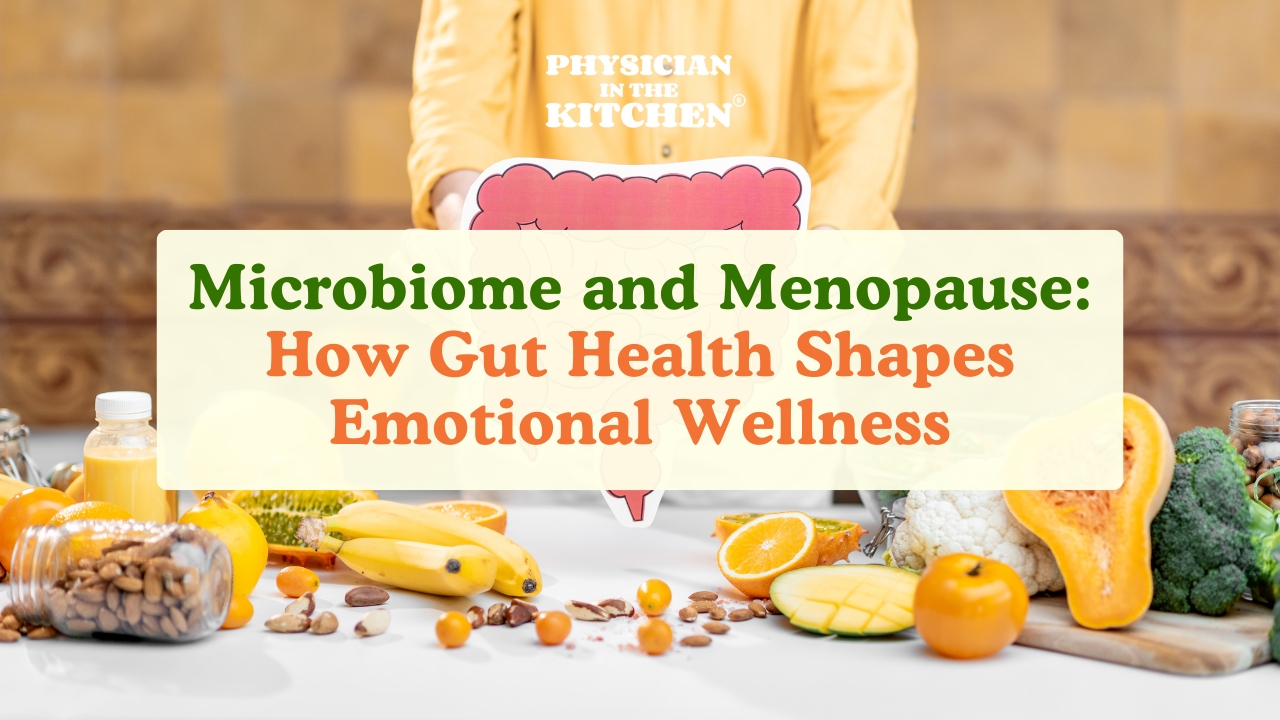
Menopause is more than hot flashes and sleep shifts. It’s a time of hormonal change that affects your whole body, including your gut.
Emerging research shows the gut microbiome plays a surprising role in how we feel emotionally during midlife. If you’re noticing low-grade anxiety, mood swings, brain fog, or fatigue as your hormones change, your gut may be part of the story and the kitchen is where you can start to help it.
Below I explain the science in plain language, then give you practical, plant-forward tools (fermented foods, fiber, prebiotics/probiotics, meal planning, and lifestyle tweaks) to support mood and hormone metabolism through the gut–brain axis.
Why the gut matters in menopause
The gut isn’t just for digestion; it communicates constantly with the brain through nerves, immune signals, and metabolites produced by gut bacteria (the “gut–brain axis”).
During the menopausal transition the mix of gut microbes shifts: several studies have documented changes in gut microbiota composition and function during perimenopause and after menopause, which may influence cardiometabolic risk, inflammation, and even mood.
A key concept is the estrobolome, the collection of gut microbes and their genes that metabolize estrogens. These microbes produce enzymes (such as β-glucuronidase) that influence how estrogens are recycled in the body.
Changes in this microbial community can affect circulating estrogen and related metabolites, which in turn may influence mood, sleep, and cognitive function during midlife.
In short: the microbes that live in your gut help shape hormone balance.
Practical, science-backed steps you can take now
1. Add fermented foods (start slow)
Fermented foods provide live bacterial cultures and may help diversify gut bacteria. Aim for a small portion daily or several times a week:
- Unsweetened yogurt or kefir (choose plant-based when possible)
- Sauerkraut or kimchi (rinse if sodium is a concern)
- Miso added to soups and dressings
- Tempeh as a plant protein (great in stir-fries and tacos)
- Apple cider vinegar with the “mother” (the cloudy, sediment-like substance at the bottom of the bottle. Contains proteins, enzymes, and “friendly” bacteria. Hi
- Introduce fermented foods gradually (they can cause gas at first) and choose versions with live cultures.
2. Flood your gut with fermentable fiber (prebiotics)
Fibers feed beneficial microbes and lead to short-chain fatty acid (SCFA) production — compounds such as acetate, propionate, and butyrate that help nourish the gut lining, reduce inflammation, and support brain and immune health.
Targets:
- Oats, barley, and cooked whole grains
- Beans and lentils (excellent and budget-friendly)
- Onions, leeks, garlic, asparagus (prebiotic veggies)
- Bananas, apples, berries (fruit + fiber)
Try to add a fiber source to every meal — it smooths blood sugar, increases satiety, and feeds mood-supporting bacteria. Evidence also links higher fiber intake with lower risk of depressive symptoms.
3. Consider targeted probiotics (when appropriate)
While whole foods are first-line, targeted probiotic supplements (Lactobacillus and Bifidobacterium species are most studied) can be useful for some people, especially those with IBS, after taking antibiotics, or with persistent low mood despite other changes.
Talk with your clinician before starting a supplement — strains and doses matter, and your medical history (including any immune compromise) should guide choices.
4. Eat a variety of plant foods (diversity matters)
Microbial diversity is a robust marker of gut health. Eating a rainbow of vegetables, fruits, whole grains, nuts, seeds, and legumes not only supplies fiber and polyphenols, it nourishes a broader range of microbes. Consider a simple rule: aim for 5–9 different plant foods per day.
5. Movement, sleep, and stress management: they change the microbiome too
Exercise, sleep quality, and stress reduction all influence the gut. Regular movement (even walking), prioritizing sleep, and daily stress resets (breathing, short walks, or journaling) all support both microbiome resilience and emotional balance.
A simple one-day sample (plant-forward + gut-friendly)
Breakfast: Oatmeal topped with mashed banana, a spoonful of ground flax, and unsweetened yogurt or kefir.
Lunch: Lentil and barley salad with mixed greens, roasted carrots, pumpkin seeds, and a miso-lemon dressing.
Snack: Apple slices + almond butter or roasted chickpeas.
Dinner: Tempeh stir-fry with broccoli, bok choy, garlic, ginger, and brown rice. Add a side of lightly dressed sauerkraut.
Night: Herbal tea, wind-down routine, and a short walk post-dinner.
What to watch for (and when to seek help)
Some people notice digestive changes (bloating, gas) when they increase fiber or fermented foods. These symptoms are often temporary, but if GI symptoms persist, see your doctor. If you have an autoimmune disease, or are pregnant, or otherwise immune-compromised, check with your clinician before adding probiotics or large amounts of fermented foods.
If mood changes are severe (suicidal thoughts, severe depression), seek professional mental health care promptly. Gut-directed strategies can be an adjunct and not a substitute for clinical care when it’s needed.
The bottom line: food + microbes = mood support in midlife
Menopause is a pivotal life stage with real emotional and physical changes.
The microbiome is an actionable part of the picture and your kitchen is the easiest place to start.
Fermented foods, a wide variety of fibers, thoughtful probiotic use when indicated, regular movement, good sleep, and stress management form a practical, science-informed toolkit to support mood and hormone metabolism during midlife.
If you want a ready-to-use plan, I offer personalized plant-forward meal plans tailored to menopausal symptom support, mood, and metabolic health — designed to fit your tastes and schedule. Book a free discovery call today!