
Back in August, I went in for my routine screening mammogram, something I have done since my baseline at age 35 and then annually starting when I turned 40.
The tech somehow did a great job of squishing my “girls” into pancakes without actually causing too much pain. She told me I would get my results within a week, so I got dressed and went home to start my day.
Imagine my surprise when just a few hours later my phone rang and I saw that it was the imaging center. Immediately I knew that wasn’t good. My stomach started forming knots before I even answered. After I said hello, the caller said words no woman wants to hear:
“We saw something abnormal in your right breast, and we need you to come back for more pictures.”
My stomach dropped. Even as a physician, hearing those words was unsettling. It’s the kind of call that makes your mind race to the worst-case scenario.
The Fear That Comes With a Callback
As a family physician, I had ordered mammograms for my patients countless times, but being on the other side of that process is a completely different (and somewhat nerve-wracking) experience. I had to remind myself that even if there was cancer in my breast, the whole purpose of screening mammograms is to catch it when it is small or early, when the chances of curing it are much higher than later stages.
But I was also thinking that there is a family history and I am now 55: both of these risk factors increase my chances of developing breast cancer, and unfortunately there is nothing I can do about either one.
A few weeks later, I went back for my diagnostic mammogram, holding my breath for the results.
Thankfully, everything turned out fine and I exhaled a huge sigh of relief.
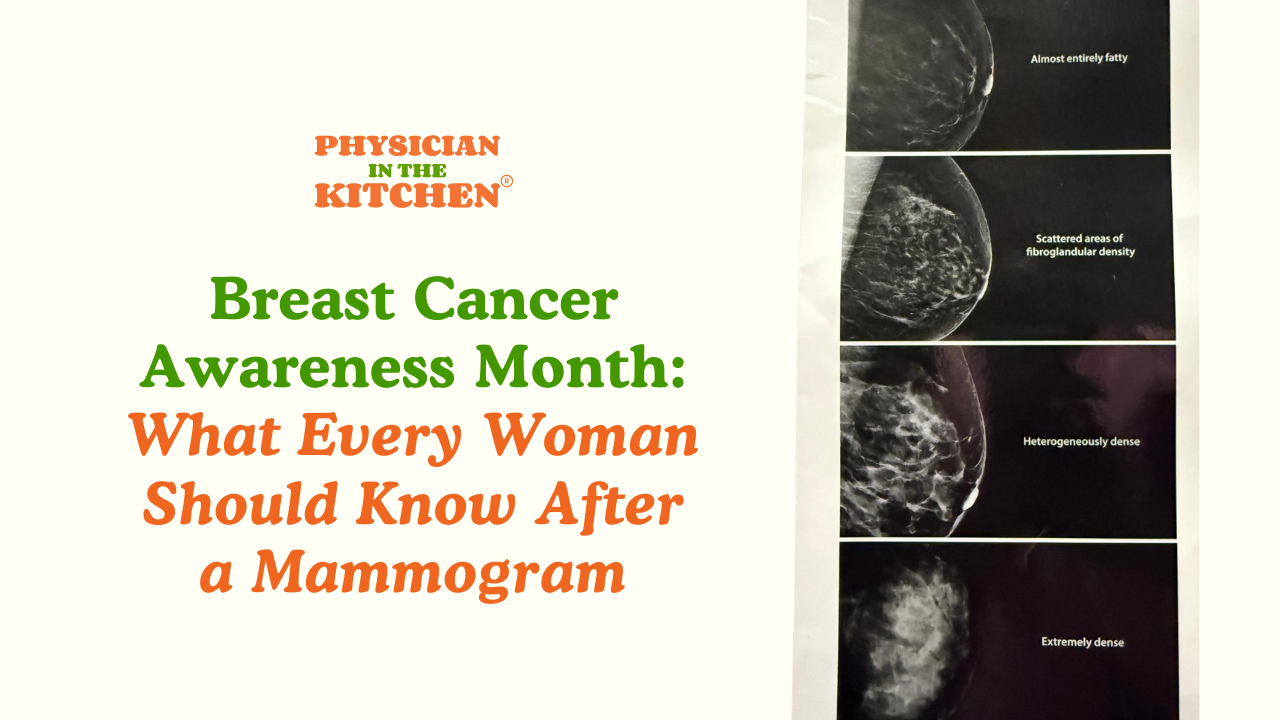
So, what had caused all the trouble? My breasts are considered “dense,” meaning that they are made up of predominately glandular and connective tissue versus fatty tissue.
Let’s take a closer look at what those terms mean.
What Does It Mean to Have Dense Breasts?
Breast tissue is made up of fatty tissue and fibrous/glandular tissue.
- Fatty breasts:Appear darker on a mammogram, which makes it easier to spot abnormalities.
- Dense breasts:Appear white on a mammogram — the same color that many breast cancers appear. This overlap can make it harder to interpret the images.
Dense breasts are common (especially in younger women and sometimes those who are leaner), and having them:
- Can make mammograms trickier to read
- May increase your chance of being called back for extra imaging
- Slightly increases your risk for breast cancer
This doesn’t mean something is wrong. It just means your doctor may need more than one tool to get the clearest picture.
Why Extra Imaging Isn’t a Bad Thing
Fear and anxiety are natural reactions when one hears the word “abnormal”.
But needing additional imaging such as an ultrasound or MRI isn’t always a bad thing. It’s about getting more views and details so nothing is missed.
I had to remind myself:
👉🏾 The purpose of screening is to find things early — ideally when they’re small and easier to treat.
👉🏾 Extra imaging is the healthcare team double-checking (and sometimes triple-checking), not a reason to panic.
👉🏾 It’s the difference between driving with a dirty or foggy windshield versus a clean one: clearer vision can save your life.
Imaging Options Beyond Screening Mammograms
The basic term “mammogram,” usually refers to a screening mammogram. But did you know there are different kinds of imaging tools available:
- Screening mammogram: The routine, baseline imaging to check for anything unusual. Having this done regularly makes it easier to detect changes.
- Diagnostic mammogram:A more detailed follow-up test when something abnormal is seen.
- Ultrasound:Helpful for distinguishing between fluid-filled cysts and solid masses.
- Breast MRI: Often used for women with dense breasts or higher risk, providing the clearest, most detailed images. In my case, my radiologist recommended this for me, which I will have done next month.
Knowing these options can help you feel more confident and empowered when navigating your breast health.
For reference, the picture below shows what breast tissue looks like on mammograms, from fatty to dense.

The arrows in the picture below shows what breast cancer looks like on mammograms.

The Emotional Side of Screening
Even knowing the medical facts, I still felt nervous waiting for my results. That was me simply being human. The anxiety of “what if” is a real thing.
But here’s what grounded me:
- Screening is proactive, not reactive.
- If something were there, this process would have caught it early.
- Taking a deep breath and following through is always better than avoiding the test.
What I Want You to Take Away
1. Don’t skip your screenings.
Schedule that mammogram. Every year when I have mine done, the center schedules the next one for a year plus one day (for insurance purposes) before I even leave. Talk to your doctor about when you should start having mammograms and how often.
2. Know your breast density.
Ask your doctor if you have dense breasts and whether you need extra imaging.
3. Follow through.
If you are called back, don’t let fear stop you from going. Callbacks are common, and most turn out normal.
4. Understand your risk factors.
Some, like age and family history, are out of our control. But others are very much within our influence. Maintaining a healthy weight, eating a diet rich in whole plant foods, staying physically active, limiting alcohol, and avoiding smoking are all powerful ways to lower your risk of breast cancer and many other chronic diseases. Prevention isn’t just about screening, but also about the daily choices we make.
5. Share this with a friend.
You never know when a reminder could make the difference.
Closing Thoughts
That callback was a scary moment, but it reinforced something I preach every day as the Physician in the Kitchen®: Prevention is powerful. Early detection is powerful. Knowledge is powerful.
So let’s use this October as a reminder to put our health first. Schedule your screening mammogram. Have the conversation. And most importantly, don’t ignore the call.
Your health is worth it. 💗
Resources & Support for Women with Breast Cancer
If you’ve recently had a mammogram callback or learned that you have dense breasts, remember — you are not alone. Education, community, and advocacy make all the difference. Here are some trusted organizations that offer information, emotional support, and resources for women navigating breast health:
- American Cancer Society:A leading source for breast cancer screening guidelines, education, and patient support programs.
- Sisters Network Inc: The only national African American breast cancer survivorship organization, dedicated to increasing awareness and access to care.
- African American Breast Cancer Alliance:Focused on education, advocacy, and peer support for Black women affected by breast cancer.
- TOUCH, The Black Breast Cancer Alliance:Working to eliminate barriers and close the gap in breast cancer outcomes for Black women.
- Tigerlily Foundation:Advocates for young women before, during, and after breast cancer — with a focus on empowerment and equity.
- SHARE Cancer Support:A community of women offering peer-led support groups, educational webinars, and resources for breast and ovarian cancer.
Remember: Knowledge is power, and community is strength. If you’re navigating questions about dense breasts, follow these organizations for reliable guidance, stories, and support from women who understand.