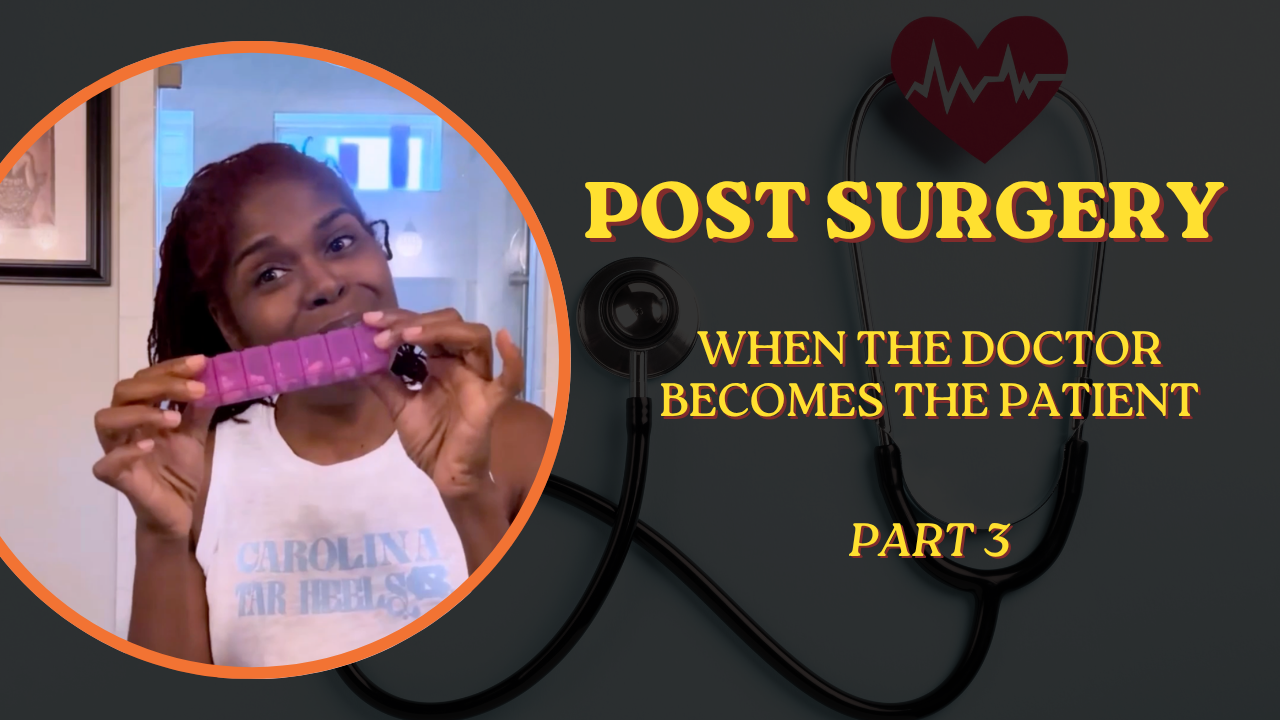
There is something humbling about becoming the patient when you have spent your life caring for others as a physician.
You can have all the degrees on the wall, years of experience, and medical knowledge in the world, but the moment you are lying in a hospital bed after surgery, everything changes. Recovery becomes personal. Pain becomes real in a different way. And suddenly, all the advice you have given patients for years takes on a whole new meaning.
After my laparoscopic adrenalectomy, I experienced recovery not only as a physician, but as a patient navigating pain, healing, fear, gratitude, and growth.
And I want to share that journey honestly.
The First Hours After Surgery
When I first woke up after surgery, the pain hit immediately.
One of the challenges after surgery is balancing pain control with safety. Because narcotic pain medications can suppress breathing, the medical team was cautious about giving too much medication too quickly.
Unfortunately, somewhere along the way, my pain medication orders were accidentally canceled.
I remember lying curled up on my side thinking:
“I just had an organ removed. I need pain relief now.”
Thankfully, the issue was corrected quickly, and once my medications were restarted, things became much more manageable. I slept on and off for most of the day as my body began the healing process.
Why Getting Up After Surgery Matters
One of the biggest things we encourage after surgery is movement.
As uncomfortable as it may feel, getting up and walking is incredibly important because prolonged bed rest can increase the risk of:
- Pneumonia
- Blood clots
- Constipation
- Delayed recovery
Early mobilization helps the lungs, circulation, bowels, and muscles recover faster.
But those first few steps?
They were not easy.
Every movement involved my core muscles. Sitting up in bed, rolling over, coughing, laughing, even taking deep breaths felt intense during those first couple of days.
DOCTOR’S ORDER: Movement Is Medicine
After surgery, gentle movement can support healing and reduce complications.
Always follow your surgeon’s recommendations, but in many cases:
- Short walks are encouraged
- Deep breathing exercises help prevent lung complications
- Staying hydrated supports recovery
- Avoiding prolonged bed rest helps circulation
Healing does not mean staying completely still.
Pain Management Is Not Weakness
I did not try to “tough it out.”
As physicians, we sometimes see patients feel guilty for needing pain medication after surgery. Let me say this clearly:
Pain control matters.
There is no prize for suffering unnecessarily.
I used the medications appropriately, listened to my body, and gradually weaned off narcotics over several days. By postoperative day six, I was feeling dramatically better and had transitioned mostly to Motrin as needed.
The Side Effects Nobody Wants to Talk About
Let’s be honest.
One of the biggest side effects of narcotic pain medications is constipation.
And after abdominal surgery, that can become very uncomfortable.
What helped me:
- Drinking fluids
- Eating fiber-rich vegetables
- Plant-based soups
- Stool softeners when needed
- Gentle movement
I cannot overstate how grateful I was when my digestive system finally started moving normally again.
Sometimes the little victories during recovery feel huge.
How Nutrition Supported My Healing
Before surgery, I prepared vegetable-packed soups to nourish my body during recovery.
Friends also sent healthy meals and soups, which made such a difference.
Fueling your body properly during healing matters.
I truly believe my plant-based lifestyle helped support:
- Recovery
- Energy levels
- Digestion
- Inflammation control
- Overall healing
DOCTOR’S ORDER: Foods That Support Recovery
After surgery, focus on nutrient-dense foods that provide:
- Protein for tissue repair
- Fiber for digestion
- Hydration
- Vitamins and antioxidants
Some excellent options include:
- Vegetable soups
- Lentils and beans
- Leafy greens
- Berries
- Whole grains
- Healthy fats
Your body is doing major repair work after surgery. Nourish it accordingly.
How Fitness Helped My Recovery
One thing my surgeon mentioned surprised me.
She explained that my surgery went more quickly because I did not have a large amount of excess fat surrounding my organs. This made the procedure technically easier.
She also noted that my strong core likely helped with recovery.
And honestly, I believe it did.
You never realize how much you use your core until you have abdominal surgery.
Everything uses your core:
- Sitting up
- Rolling over
- Laughing
- Sneezing
- Breathing deeply
- Walking
I have consistently worked on my fitness and core strength for years, and I genuinely believe it helped me recover more efficiently.
Blood Pressure Changes After Adrenal Surgery
Because my surgery involved removing an adrenal gland, my blood pressure required close monitoring afterward.
Immediately after surgery, my blood pressure actually improved enough that I was temporarily off medication.
This happens because hormone levels begin shifting after the overactive adrenal gland is removed. However, the body still needs time to rebalance, and fluctuations can occur for several months as the remaining adrenal gland adjusts.
Recovery is not always linear.
Understanding Laparoscopic Surgery
My procedure was performed laparoscopically using several small incisions called “ports.”
Instead of one large incision, the surgeon used small openings to remove the adrenal gland.
Benefits of laparoscopic surgery often include:
- Smaller scars
- Less pain
- Lower infection risk
- Faster healing
- Reduced complications
- Shorter recovery time
For someone eager to get back to life and work, this approach was a blessing.
The Emotional Side of Scars
One of my incision sites crossed through a birthmark shaped like a heart.
At first, seeing the scar upset me.
I thought:
“She cut my heart.”
But then I reframed it.
Scars tell stories.
And this one became symbolic for me.
My heart has been hurt before. Life has challenged me before. Yet I survived. I healed. I grew stronger.
This scar became another reminder of resilience.
DOCTOR’S ORDER: Give Yourself Grace During Recovery
Healing is physical, emotional, and mental.
Some days you feel strong.
Other days you feel frustrated or exhausted.
That is normal.
Recovery is not a race.
Listen to your body.
Honor your limitations.
Celebrate small wins.
Returning to Movement Carefully
By postoperative day six, I finally felt like I had turned the corner.
I could laugh, cough, roll over, and breathe deeply without significant pain. I even started considering a very light recovery ride on my bike because movement is such an important part of my life.
But recovery also requires patience.
There is a difference between gentle movement and pushing too hard too soon.
I am committed to healing properly.
The Human Body Is Amazing
One thing this experience reminded me is how incredible the human body truly is.
The body wants to heal.
Given the right support, nourishment, movement, rest, and care, it can recover in remarkable ways.
This journey has deepened my empathy as a physician and strengthened my gratitude as a patient.
And for anyone currently recovering from surgery:
Be patient with yourself.
Trust the process.
Celebrate progress.
And remember that healing takes time.
But little by little, you will turn the corner too.